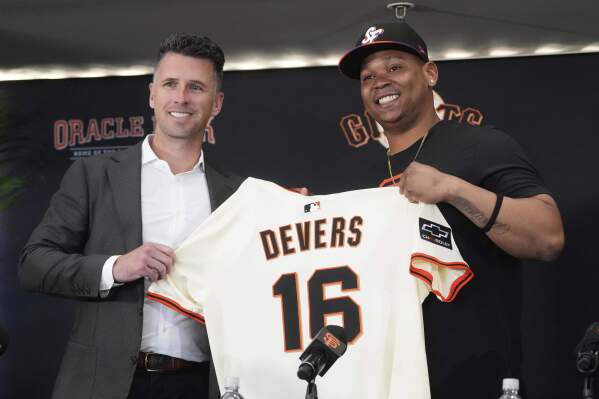
The Rafael Devers trade to the San Francisco Giants was never just about baseball. It wasn’t just a team offloading a star or a player looking for a fresh start. This trade was the culmination of years of misaligned leadership, frayed relationships, and a clubhouse culture under siege. The fallout from this stunning deal has exposed deep-rooted dysfunction within one of Major League Baseball’s most storied franchises.
Why the Trade Wasn’t Just About Baseball
When the Red Sox sent Rafael Devers to the Giants in exchange for Kyle Harrison, Jordan Hicks, James Tibbs III, and Jose Bello, most analysts immediately questioned the return. Devers, after all, is a three-time All-Star slugger still in his prime with a contract that runs through 2033. The optics were jarring, but the backstory was even more damning.
Joon Lee of Yahoo Sports wrote a piece that destroyed any hope Red Sox fans may have had that this team knows what it is doing.
According to Lee, the trade was a result of “eroded trust” and “fraying relationships.” Internal sources described the atmosphere in the Red Sox organization as “an absolute s*** show”.
While Rafael Devers was once hailed as the heir apparent to David Ortiz and Xander Bogaerts, his lack of vocal leadership became a sticking point internally. Despite his on-field production, Devers never fully stepped into the leadership vacuum that opened after Bogaerts departed in 2023.
But that, of course, isn’t why he was dealt.
The full-on meltdown Devers had this year following the signing of Alex Bregman is what started this whole saga. Devers initially refused to move from third base to DH, then he refused to move from DH to first after teammate Triston Casas went down with a catastrophic injury. Then, when Bregman also got hurt, Devers wouldn’t even move back to third.
David Ortiz, a franchise icon and vocal mentor figure, tried to mentor Devers through the situation. Ultimately, Devers hardly ever returned his messages.
Multiple sources claimed Devers’ refusal to play first base and his frustrated public remarks set a tone of entitlement that threatened the locker room’s harmony. Management believed his presence could send the wrong message to younger players trying to build professional habits.
Instead of navigating that leadership challenge, the team chose to eject its star player. In doing so, they drew a hard line: no matter your resume, no one is bigger than “the culture.” But critics argue the front office created the very cultural problems it now claims to solve.
Red Sox Have Been Exposed
Beyond the Devers drama, the fallout exposes a Red Sox player development pipeline that is deeply flawed. Coaches have expressed frustration that the front office prioritizes metrics and swing data over fundamental baseball skills. That failure has shown up on the field: Boston leads MLB in errors.
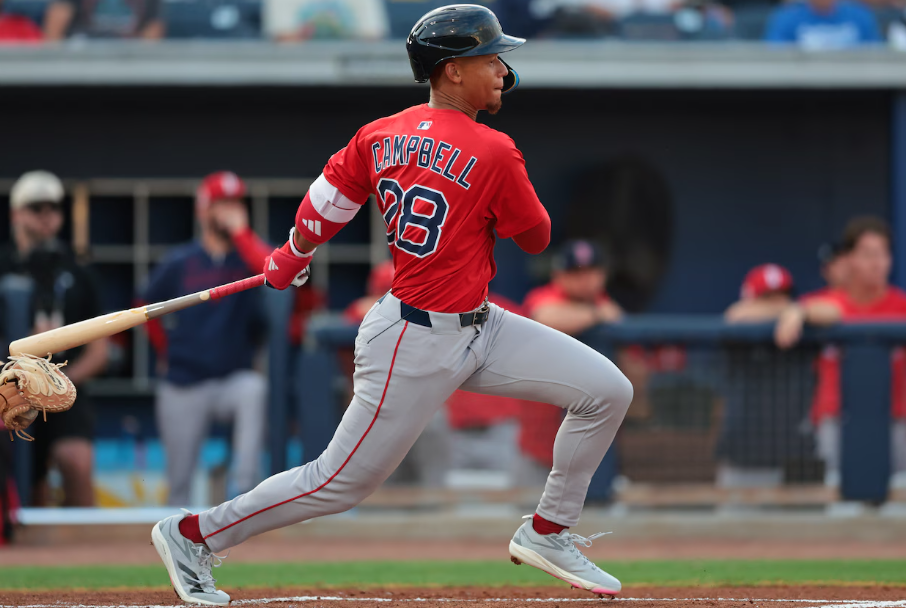
Players like Kristian Campbell have struggled defensively, and high-profile call-ups like Roman Anthony were publicly “corrected” in media-viewable practice sessions—an approach seen by many as a passive-aggressive jab from the coaching staff to the analytics-heavy front office.
The cultural breakdown isn’t limited to players and executives. It’s now bleeding into developmental processes, affecting the growth of the very rookies the team is supposedly prioritizing.
Red Sox Press Conference: Euphemisms for Crisis
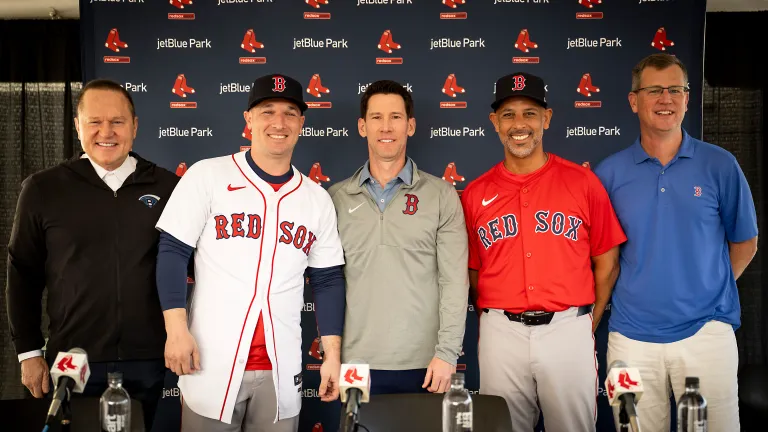
The day after the trade, the Red Sox front office addressed the media. Both Breslow and team president Sam Kennedy danced around the core issue like the robots they are.
This presser, which was done on Zoom by the way, was a complete waste of time. When asked about the departure of star players becoming a trend in the organization, Kennedy chose to boast about the team’s four championship rings this century. What a joke.
Kennedy once said that the two sides had reached an “inflection point” where alignment was no longer possible. Yet, that term’s vagueness left fans with more questions than answers. What was really broken, and could it have been fixed?
Devers and the Giants: A Sudden Change of Tune
One of the most telling elements of this saga is how quickly Rafael Devers adapted to his new team. During his introductory press conference with the Giants, he openly embraced playing first base—a role he refused to accept in Boston despite a desperate need following Triston Casas’ injury.
This willingness raised eyebrows. In Boston, Devers’ inflexibility was seen as emblematic of his discontent and growing disconnect from team leadership. In San Francisco, that friction vanished. Whether this points to a rejuvenated player or simply a better-managed situation, one thing is clear: Devers was no longer willing to play for a front office he no longer trusted.
Ownership’s Silence and Fans’ Outrage
The Devers trade lit a fuse among Red Sox fans, and ownership’s silence only made matters worse. While John Henry once served as a hands-on steward of the franchise, his focus has increasingly shifted to other holdings under the Fenway Sports Group umbrella, including Liverpool FC.
The optics were impossible to ignore: days before the Red Sox offloaded a $300 million contract, FSG spent nearly $160 million on German star Florian Wirtz for Liverpool. To Red Sox fans, it felt like an abandonment—proof that baseball was no longer a top priority.
On social media, fan sentiment has turned hostile. Many see the Devers move as a betrayal on par with the Mookie Betts trade—a financial decision disguised as a culture shift. What makes it worse this time? The team hasn’t won a playoff game since Betts was traded.
Conclusion: Not Just a Trade—A Tipping Point
The Rafael Devers trade was not a baseball move. It was a referendum on leadership, culture, and the soul of an organization that once set the standard in modern baseball.
This wasn’t just a player changing uniforms. This was a franchise hitting a wall. Whether the Red Sox can find their way out of this cultural and competitive purgatory remains to be seen. But one thing is certain: this trade marks a turning point, not just for Boston—but for how modern sports organizations define loyalty, leadership, and success.